The hard part isn’t the screen. It’s deciding what we’re building.
Selected work
2018–2026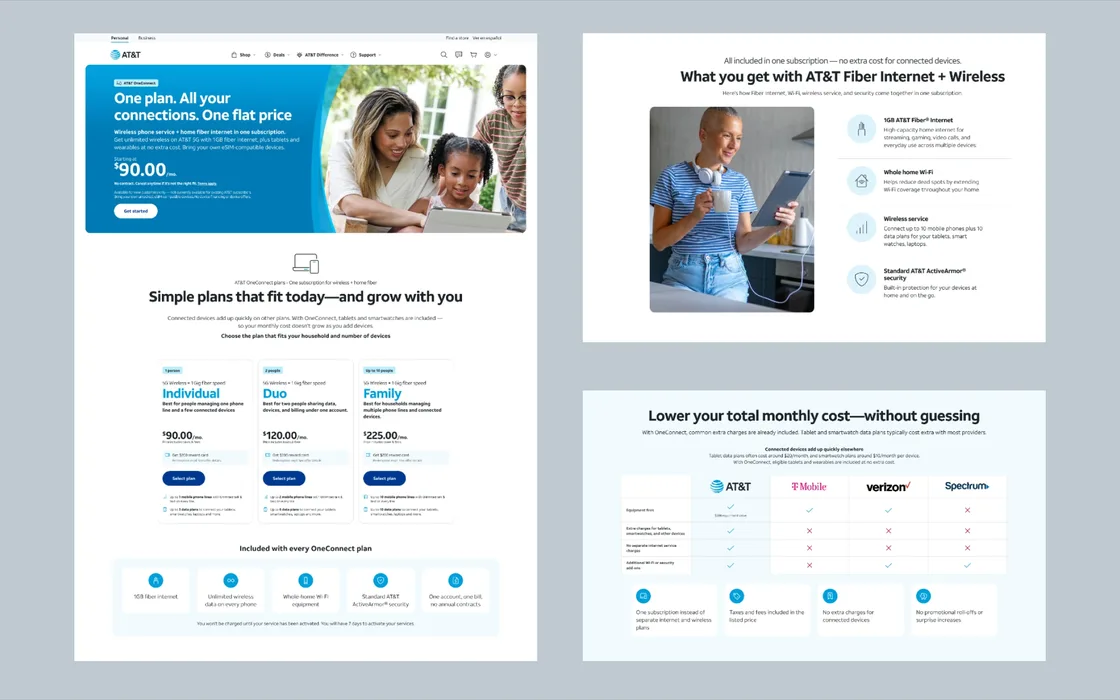
More work
Briefly, without a case studyNext-generation wireless buy flow
Wireless account experience
Early-stage healthcare AI venture
Developer community redesign
How I work
MethodA brief almost never contains a problem. It contains a subject, a deadline, and somebody’s hope. The work is turning that into something a company can decide about — and then designing against the decision.
-
01
Go find the evidence
Nobody hands it to you. I go to analytics and session data, trace real journeys on real accounts, and keep asking until the question is specific enough to answer. AI lets me work through far more of it than I could by hand.
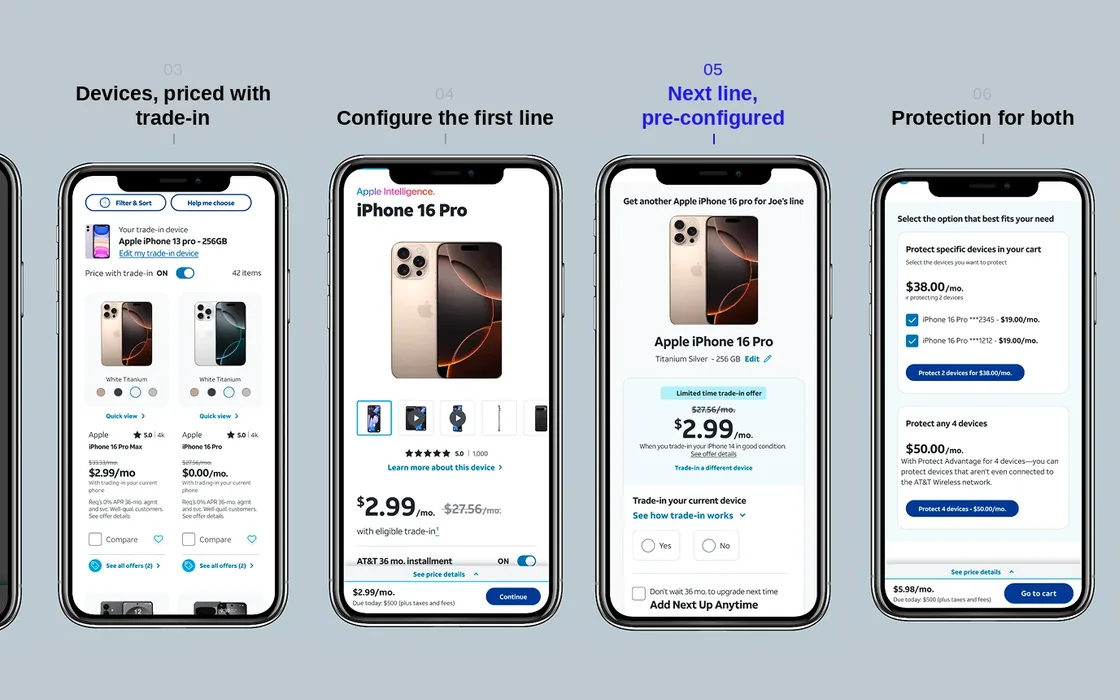
Came back with 2.2 devices per multi-line upgrade and 94% same manufacturer — the two numbers the whole solution rests on. · Multi-line upgrade
-
02
Size it honestly
Use case by use case: what breaks, which systems it touches, and which parts are not mine to solve. Saying what is out of scope is what makes an estimate believable.
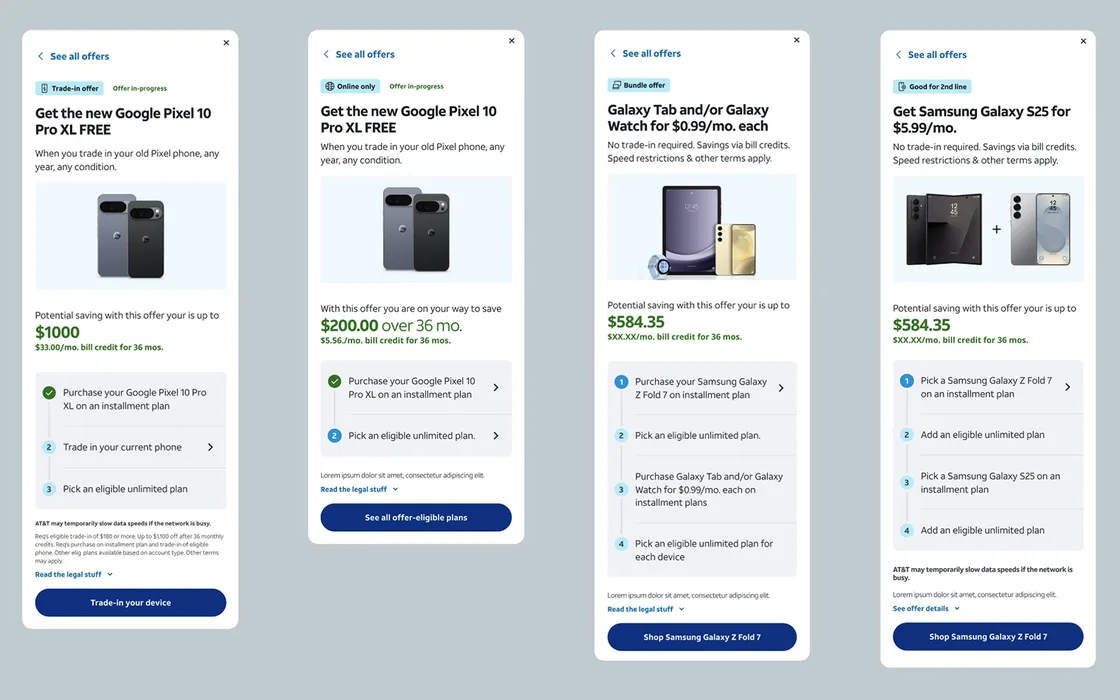
A one-line brief became a countable list of use cases and affected systems, which is what a funding decision actually runs on. · Offer clarity
-
03
Design against one model
One idea, held consistently, so that surfaces owned by different teams end up agreeing without anyone being ordered to.
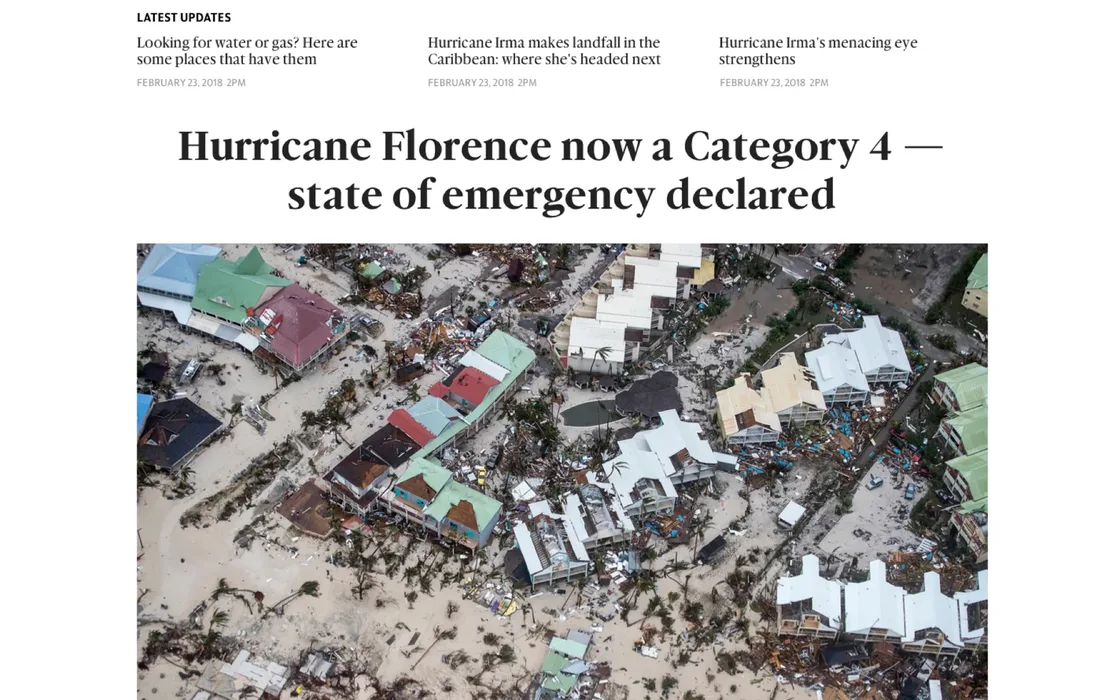
One atomic design system, then breaking-news escalation built entirely from parts the newsrooms already had. · Newsroom platform
-
04
Test what you are least sure of
The load-bearing assumption first, not the safe one. With AI-built prototypes, testing it early is cheap. A study is only worth running if a bad number changes something.
The pre-configured line tested 83–88% useful — but only 62% found the way out, so we changed it before it shipped. · Multi-line upgrade
-
05
Get it decided
A recommendation nobody funds is still an opinion. I take working prototypes and the evidence to the people who decide, up to AVP, VP and SVP level, and lay out the trade-offs plainly enough to settle in the room.
Pitched a redesign of the wireless account experience on my own. Senior leadership funded it, and it is still in production. · Wireless account
-
06
Say what actually happened
What shipped, what did not, and what the numbers did. Including the problems design could not fix.
Shipped, then found most customers are not buying both services at once — so phases two and three go to customers who already have one of them. · OneConnect
-
—
AI as a working method
Concepts built as working prototypes in Lovable, so research tests real alternatives. Test plans, questions and synthesis with enterprise AI. AI widens the options; research and judgment still choose.
Testing and design validation only kept pace with the launch because of AI: Lovable prototypes for research, and AI agents checking each screen. · OneConnect
About
Dallas, TXThirteen years designing commerce, content and community products. At AT&T that is telecom commerce, where the pricing is complicated, the systems are old, and the customer just wants to know what a phone costs. Before that, McClatchy’s news platform and a developer community of more than a million members, where I designed both sides: the tools newsrooms and content teams publish with, and the experience readers and members see.
I am usually brought in at the front of a launch, before there is anything to critique. At AT&T I have been the lead designer on account management projects and then on commerce, including OneConnect.
On each project I make the experience call when technology, timelines and the business pull against what customers need. Designs should change for those things; my job is knowing where the experience can bend and where it cannot, because the customer would pay for it. I argue for research when the schedule does not want it, and care more about the pattern that outlives the project than the screen that ships this quarter.
None of the people I lead report to me. On a typical AT&T project that is other designers, project managers, product owners, dev leads and business partners. I bring engineering and architects in before the design is locked, and I have supported as many as four scrum teams at once. Leading designers goes back to McClatchy, where I directed the designers on the template program and coached junior designers on the design system and accessibility. At AT&T I am an informal mentor to five designers and help bring new ones on board.
Recognition: Silver, ATS Optimum Team Award (AT&T, 2026, for OneConnect); AT&T Connection Award, five consecutive years; speaker at the AT&T Design Summit.
I also build: I made this site by writing specs for Claude Code and reviewing its code in a git repository. Outside of work: a learning project I am building for my kids, and long hikes with no phone signal.
I coach the Innovation Project for a FIRST LEGO League team — nine students, this season researching how urban heat affects native trees and local biodiversity in Dallas. It is the same work in miniature: narrow a broad theme into a problem you can actually test, go to primary sources instead of secondary reading, and get every member ready to defend it live to judges.